Unlocking the Power of Dual SIM: Tips and Tricks for Seamless Switching
The proliferation of mobile communication has led to increased demand for flexible and adaptable connectivity solutions. Dual SIM technology has emerged as a significant feature in modern smartphones, offering users the ability to manage two independent cellular connections within a single device. This article explores the practical aspects of utilizing dual SIM functionality, providing guidance on optimizing its benefits, managing multiple numbers, and improving overall network experience.
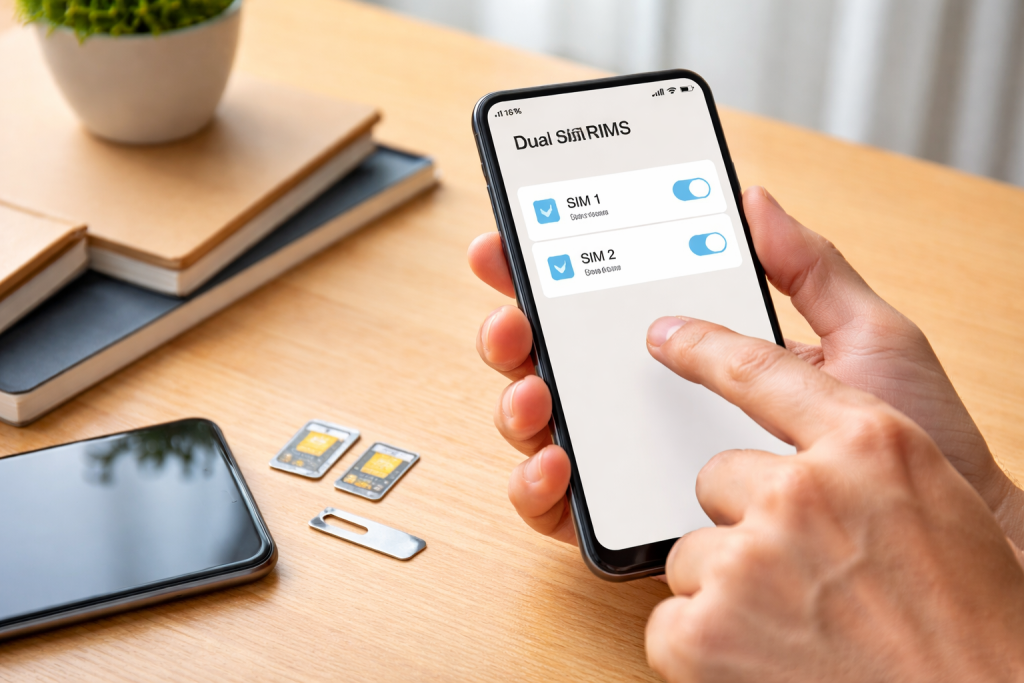
Dual SIM refers to the capability of a mobile phone to house and operate with two Subscriber Identity Modules (SIMs) simultaneously. These SIM cards can be from the same network provider or different ones, offering a range of possibilities for managing communication needs. Historically, dual SIM phones were often associated with basic feature phones, but the technology has been integrated into advanced smartphones, providing users with sophisticated control over their connections.
Contents
- 0.1 Types of Dual SIM Implementations
- 0.2 Separating Work and Personal Life
- 0.3 International Travel and Roaming
- 0.4 Dedicated Numbers for Specific Purposes
- 0.5 Leveraging Different Network Providers
- 0.6 Ensuring Redundancy in Critical Situations
- 0.7 Optimizing Data Speeds and Reliability
- 0.8 Call and SMS Management
- 0.9 Data SIM Selection
- 0.10 Quick Settings and Notifications
- 0.11 Intelligent Data Plan Management
- 0.12 Smart Roaming Strategies
- 0.13 Data Usage Monitoring Per SIM
- 0.14 Ringtone and Notification Customization
- 0.15 Contact Association
- 0.16 App-Specific SIM Usage
- 1 FAQs
- 1.1 1. What is Dual SIM, and what are the benefits of using it?
- 1.2 2. How can I seamlessly switch between SIM cards on a dual SIM device?
- 1.3 3. What are some tips and tricks for managing multiple numbers with ease on a Dual SIM device?
- 1.4 4. How can I maximize network coverage and connectivity with a Dual SIM device?
- 1.5 5. What are some ways to optimize data usage and roaming with a Dual SIM device?
Types of Dual SIM Implementations
Not all dual SIM phones operate identically. Understanding the distinctions is crucial for maximizing their utility.
Dual SIM Dual Standby (DSDS)
DSDS is the most common implementation in modern smartphones. In a DSDS device, both SIM cards are active and registered on their respective networks simultaneously. You can receive calls and messages on either number. However, when one SIM is actively being used for a call or data transmission, the other SIM may become temporarily inactive. This means if you are on a call on SIM 1, a call attempting to reach SIM 2 might go to voicemail. This procedure is comparable to having two separate mailboxes, where you can check either at any time, but if you’re writing a letter in one, you can’t simultaneously be writing in the other.
Dual SIM Dual Active (DSDA)
DSDA technology is less common due to increased hardware and power consumption requirements. In a DSDA phone, both SIM cards are fully active and capable of receiving calls or data simultaneously, even if one is already engaged. This feature is akin to having two fully independent phone lines on one device, each capable of simultaneous communication. While offering maximum flexibility, DSDA phones typically consume more power and are often found in specialized or higher-end devices.
Hybrid SIM Slots
Some devices feature a “hybrid” SIM slot. This slot can accommodate either a second SIM card or a microSD card for expandable storage. This design choice presents a trade-off: you can either have two SIMs or one SIM and expanded storage, but not both simultaneously. When considering such a device, reflect on your priorities for connectivity versus storage. This type of slot is like a single-purpose slot that can be a garage door or a front door, but not both at once.
The primary advantage of dual SIM technology lies in its ability to simplify the management of multiple phone numbers. This feature addresses various practical scenarios for personal and professional users.
Separating Work and Personal Life
Many individuals find it difficult to distinguish between professional and personal communication. A dual SIM phone provides a clear demarcation. You can dedicate one SIM for work-related calls, messages, and data, and the other for personal contacts. This separation helps maintain boundaries, allowing you to prioritize and manage interactions without needing to carry two distinct devices. Imagine two separate address books within one cover, each with its own dedicated entries.
International Travel and Roaming
Traveling internationally often involves high roaming charges. With a dual SIM phone, you can insert a local SIM card from your destination country while keeping your primary SIM active for essential contacts or apps that require your home number. This strategy significantly reduces roaming costs for data and local calls. You can use the local SIM for everyday communication in the new country, much like having a local guide who knows all the shortcuts, while your trusted home SIM remains a lifeline to your origin.
Dedicated Numbers for Specific Purposes
Beyond work and personal separation, dual SIM can facilitate dedicated numbers for specific functions. For instance, you might use one SIM for online registrations, e-commerce, or subscription services, while keeping your primary number private. This can help in managing spam calls and unsolicited messages, acting as a filter for unwanted communications. Think of it as having a “public” number for general interactions and a “private” number for close connections, similar to using a public email address for newsletters and a personal one for close friends.
Dual SIM functionality extends beyond number management to significantly enhance your network experience, particularly in areas with inconsistent coverage.
Leveraging Different Network Providers
Not all network providers offer uniform coverage in every location. You might find that one provider has a strong signal in your home, while another excels in your workplace or during your commute. With dual SIM, you can subscribe to two different networks and switch between them as needed. If one network experiences an outage or has a poor signal in a particular area, you can seamlessly activate the other SIM to maintain connectivity. This process is akin to having two different roads to the same destination; if one is blocked, you can take the other.
Ensuring Redundancy in Critical Situations
For individuals who rely heavily on constant connectivity, dual SIM provides a crucial layer of redundancy. In areas where certain networks are prone to congestion or temporary disruptions, having an alternative network readily available can be invaluable. This ensures that you remain reachable and can access essential services even when one network falters. Think of it as having a backup generator for your household electricity; when the main power goes out, the backup kicks in.
Optimizing Data Speeds and Reliability
Different networks may offer varying data speeds or prioritize data traffic differently. You might use one SIM for high-bandwidth activities like streaming or large downloads, where one provider offers superior performance, and the other SIM for general communication. This strategic allocation of resources allows you to optimize your data experience based on specific needs and available network conditions. You can choose the fastest lane depending on traffic conditions.
The practical implementation of dual SIM technology relies on the ease with which users can switch between their active connections. Modern smartphone operating systems offer intuitive controls for this.
Call and SMS Management
When making a call or sending an SMS, your phone will typically present an option to choose which SIM card to use. This choice can be made on a per-call or per-message basis, or you can set a default SIM for all outgoing communications. This flexibility allows you to seamlessly direct your communication through the appropriate number. Imagine a traffic controller at an intersection, effortlessly directing vehicles into the correct lanes.
Data SIM Selection
For data usage, you typically designate one SIM as the “preferred” or “primary” data SIM. This SIM will be used for all internet-dependent applications and services. However, you can easily switch this preference in your phone’s settings when desired. This is particularly useful when one SIM offers a more generous data plan or better coverage in your current location. You have the ability to switch your primary data pipeline at will.
Quick Settings and Notifications
Most smartphones with dual SIM functionality integrate switching options directly into the quick settings panel or notification shade. This provides fast access to changing your preferred SIM for calls, messages, or data without navigating through deep menu structures. These quick controls are like readily accessible switches on a control panel, allowing for immediate adjustments.
Leveraging dual SIM capabilities effectively can lead to significant cost savings and better data management, especially when traveling or managing multiple data plans.
Intelligent Data Plan Management
With two SIM slots, you can subscribe to different data plans from different providers. For example, you might opt for a smaller, cheaper plan for your primary SIM that covers essential communication and a larger, more data-intensive plan on your secondary SIM for streaming or downloads, potentially from a provider offering competitive rates. This allows for more granular control over your monthly expenditure. It’s like having two different-sized buckets for water; you use the larger one for gardening and the smaller one for drinking, optimizing your water usage.
Smart Roaming Strategies
As mentioned earlier, utilizing a local SIM card when traveling is a powerful strategy to avoid exorbitant roaming fees. Beyond this, some network providers offer specific international roaming packages that can be activated on one of your SIMs, while the other remains active for critical communications from home. Carefully researching and comparing these options across your two potential network providers can lead to substantial savings. Before embarking on your journey, consider which network offers the best “travel insurance” for your communication needs.
Data Usage Monitoring Per SIM
Modern dual SIM phones often provide dedicated data usage monitoring for each SIM card. This allows you to track individual consumption, set data limits for each, and receive alerts when you approach your allocated allowance. This detailed oversight empowers you to stay within your data caps and avoid unexpected charges. It’s like having separate fuel gauges for two different tanks in a vehicle, allowing you to monitor and manage each supply independently.
Beyond basic switching, modern dual SIM devices offer a range of customization options to tailor the experience for each individual SIM card.
Ringtone and Notification Customization
To help distinguish between incoming calls and messages from each number, many phones allow you to assign unique ringtones and notification sounds to each SIM card. This auditory distinction can be particularly helpful for separating work calls from personal calls or-sized identifying calls from specific groups of contacts. This is comparable to having different doorbells for different entrances to your home.
Contact Association
Some dual SIM phones enable you to associate specific contacts with a default SIM card for outgoing calls and messages. This means that when you initiate communication with a particular contact, the phone will automatically use the designated SIM without prompting. This streamlines communication for frequently contacted individuals. It’s like having speed dial buttons, each configured to use a specific line.
App-Specific SIM Usage
Certain advanced dual SIM implementations may allow you to configure specific apps to preferentially use data from one particular SIM card. For example, you might designate a work-related messaging app to always use data from your work SIM, even if your personal SIM is currently set as the primary data source. This offers a finer level of control over your data consumption and app behavior. This is akin to having dedicated hoses for different faucets, ensuring the right type of water flows to the correct fixture.
FAQs
1. What is Dual SIM, and what are the benefits of using it?
Dual SIM is a feature that allows a mobile device to use two SIM cards simultaneously. The benefits of using Dual SIM include the ability to manage two phone numbers on one device, maximize network coverage and connectivity, and optimize data usage and roaming.
2. How can I seamlessly switch between SIM cards on a dual SIM device?
To seamlessly switch between SIM cards on a dual SIM device, you can customize settings for each SIM card, such as designating a default SIM for calls, texts, and data. Additionally, some devices offer the option to manually switch between SIM cards for specific calls or messages.
3. What are some tips and tricks for managing multiple numbers with ease on a Dual SIM device?
Some tips and tricks for managing multiple numbers with ease on a dual SIM device include assigning specific contacts to a particular SIM card, using dual messaging apps for each SIM card, and setting up call forwarding or call waiting for each SIM card.
4. How can I maximize network coverage and connectivity with a Dual SIM device?
To maximize network coverage and connectivity with a Dual SIM device, you can take advantage of the ability to use different network providers for each SIM card. This can be especially useful when traveling or in areas with limited network coverage for a specific provider.
5. What are some ways to optimize data usage and roaming with a Dual SIM device?
To optimize data usage and roaming with a dual SIM device, you can set data usage limits for each SIM card, enable or disable data roaming for each SIM card, and monitor data usage for each SIM card separately. Additionally, some devices offer the option to use one SIM card for data while the other is used for calls and texts.

Smart Tech Manual is a technology-focused platform dedicated to providing simple, clear, and beginner-friendly guides for everyday users.